Tuesday, May 28, 2024

Can Weight Loss Companies Fuel Gains in Your Stock Portfolio?


Please note that this is a sister publication of WallStreetNewsNetwork ( https://WStNN.com ) and postings will end on this site shortly. Please go to https://WStNN.com for all future posts. 

 The past year has seen a surge in the popularity of injectable medications for weight loss. Drugs like Ozempic and Wegovy, both made by Novo Nordisk (NVO), and Zepbound and Mounjaro, which are manufactured by Eli Lilly (LLY), are finding themselves in high demand, despite their hefty price tags and limited insurance coverage.

This trend reflects a growing openness to pharmaceutical solutions for weight management, alongside traditional methods like diet and exercise. These injectable drugs, which mimic natural gut hormones, work by curbing appetite and promoting feelings of fullness. Studies have shown significant weight loss in patients using these medications.


Ozempic and Wegovy are both GLP-1 receptor agonists, targeting a specific hormone that regulates appetite and blood sugar. Ozempic was originally approved for type 2 diabetes, but its weight loss side effects have driven its use in that area as well. Wegovy, on the other hand, is specifically FDA-approved for chronic weight management.

Zepbound, a newcomer to the market, is another GLP-1 receptor agonist with an additional twist. It also targets another gut hormone, GIP, that further enhances feelings of fullness and reduces appetite. Early studies suggest Zepbound may lead to even greater weight loss than Wegovy.

Mounjaro, another Eli Lilly product, joins the party as a dualincretin medication. Like Zepbound, it targets both GLP-1 and GIP receptors, offering similar weight loss benefits. Interestingly, Mounjaro is actually FDA-approved for type 2 diabetes, but like Ozempic, its weight loss effects are driving its use in that area as well. Studies suggest Mounjaro might be as effective as Zepbound in terms of weight loss.

This rise in weight loss injectable use is projected to continue. Analysts predict the weight loss drug market could reach $100 billion by the end of the decade, with millions of patients potentially using these medications. However, challenges remain. The high cost and limited insurance coverage are barriers for many. Additionally, long-term side effects of these medications are still being studied.

While these injectable drugs offer a promising new tool for weight management, they are not a magic bullet. They are most effective when used in conjunction with a healthy diet and exercise program.

Novo Nordisk (NVO) is a global healthcare company headquartered near Copenhagen, Denmark, with a rich history dating back to 1923. Their founding story is intertwined with the discovery of insulin, a revolutionary treatment for diabetes.

The company’s mission is “to drive change to defeat serious chronic diseases,” and they have become a leader in the diabetes care space. They develop and manufacture a wide range of diabetes medications, including injectable insulins and GLP-1 receptor agonists like the popular Ozempic and Wegovy mentioned earlier.

Beyond diabetes, Novo Nordisk is expanding its reach into other chronic diseases. They offer treatments for obesity, such as Wegovy, and medications for hemophilia and other rare blood disorders. Their research and development efforts continue to push boundaries in these areas.

    Novo Nordisk employs over 64,000 people worldwide and distributes its products in over 170 countries.

    The stock trades at 44 times trailing earnings and 31 time forward earnings. Quarterly revenue growth year-over-year was 23.6%, with earning growth over the same period at an incredible 30.7%.

    Novo pays a dividend semi-annually, with an estimated yield of 1.31%. 

    Eli Lilly and Company (LLY), headquartered in Indianapolis, Indiana, boasts a rich heritage dating back to 1876. Founded by Colonel Eli Lilly with a vision to “take what you find here and make it better and better,” the company has established itself as a major player in the pharmaceutical industry.

    Eli Lilly is dedicated to turning science into solutions for a healthier world. Their core focus lies in research and development, with a significant portion of their workforce dedicated to this pursuit. They leverage advancements in biotechnology, chemistry, and genetic medicine to tackle some of the world’s most pressing health challenges.

    The company’s product portfolio is extensive, encompassing medications for a wide range of conditions. Here’s a glimpse into their key areas:

    • Diabetes: Eli Lilly has a strong presence in diabetes care, offering medications beyond the newcomer, Mounjaro,discussed earlier.
    • Oncology: They are actively involved in cancer research and development, producing treatments for various types of cancer.
    • Immunology: Eli Lilly develops medications for autoimmune diseases and other conditions related to the immune system.
    • Pain Management: The company offers a range of pain management solutions.
    • Others: Eli Lilly’s product line also includes medications for neurology, endocrinology, and other therapeutic areas.

    With over 44,000 employees worldwide and a strong emphasis on scientific advancement, Eli Lilly remains a force to be reckoned with in the global pharmaceutical landscape.

    Lilly has a nosebleed high trailing price to earnings ratio of 116; but a bit more reasonable forward P/E of 41.5. Quarterly revenue growth grew 26%, with quarterly earnings per share growth at a superior 66.7% year-over-year. 

    The company pays dividends quarterly and yields 0.67%.

    If you are looking for a non-pharmaceutical investment option, there is WW International (WW).

    WW International, Inc., formerly known as Weight Watchers International, is a global company headquartered in New York City. Founded in 1963 by Jean Nidetch, WW has a long history of helping people achieve weight loss and wellness goals.

    Shifting Focus: Beyond Weight Loss

    Traditionally, WW was known for its weight loss programs, often centered around group meetings and a points-based system for tracking food intake. However, in 2018, the company underwent a significant rebranding, reflecting a shift towards a more holistic approach to health and wellness.

    This move is reflected in their new name, WW, which purposely avoids mentioning weight. Their current programs encompass aspects like fitness, mindset, and overall healthy habits, not just weight loss on the scale.

    WW’s Offerings Today

    WW offers a multi-pronged approach to wellness, with options to suit different needs and preferences:

    • Digital Solutions: Their mobile app and website provide access to tools for tracking food, activity, weight, and sleep. They also offer educational content and motivational support.
    • Coaching: WW provides online or phone coaching for personalized guidance and support.
    • Wellness Workshops: These in-person group meetings, formerly known as Weight Watchers meetings, foster a sense of community and offer guidance on healthy living.

    Financial Performance

    While they have faced challenges in recent years, they remain a major player in the weight management and wellness industry.

    The stock has taken a major hit in the last seven months, dropping from above $13 a share to now less than two dollars a share. 

    The company generated a huge lost for the year; however, it is estimated that it will produce a reasonable profit next year, providing a forward P/E of 7.06.

    Summary

    Novo and Lilly have already had major gains in their stock price. It remains to be seen it this growth will continue, especially with greater acceptance of their drugs. 

    Hopefully, one of these companies can provide greater weight to your portfolio.

    Disclosure: Author has a small bullish call position in Novo.


    Wednesday, May 22, 2024

    Exploring the Significance of Gold in History and the Economy


      Please note that this is a sister publication of WallStreetNewsNetwork ( https://WStNN.com ) and postings will end on this site shortly. Please go to https://WStNN.com for all future posts. 

    Recently, we posted an article about silver as an investment. Now it’s time for gold.

    Gold has captivated humanity for millennia, with its allure dating back to ancient civilizations. As shiny nuggets were first discovered, gold quickly became a symbol of wealth and power. The scarcity and distinctive properties of gold made it highly prized. This led to the adoption of gold as currency by various cultures across the globe. Gold played a crucial role in shaping economies and trade networks, facilitating commerce and influencing political dynamics.

    The California Gold Rush of the mid-19th century marked a pivotal moment in gold’s history. The discovery of gold nuggets at Sutter’s Mill in 1848 sparked a large migration to the American West, drawing people from all walks of life in search of fortune. The influx of prospectors fueled rapid economic growth and transformed California into a growing economy. 

    Gold is often regarded as a hedge against inflation due to its historical track record of preserving wealth during times of economic uncertainty. When inflation rises, the purchasing power of fiat currencies decreases. This leads investors to seek assets that can retain their value. Gold has demonstrated its ability to act as a store of value over centuries, making it a popular choice for investors looking to protect their wealth from the devastating effects of inflation.

    During periods of high inflation, the price of gold tends to increase as investors flock to it as a safe haven asset. Gold’s scarcity and tangible nature contribute to its appeal as a hedge against inflation. Unlike fiat currencies, which can be subject to manipulation by central banks. The gold supply is limited, providing a natural defense against currency devaluation. Additionally, gold has inherent value and is not reliant on the performance of financial markets, making it a reliable hedge during times of economic turbulence.

    Gold’s status as a globally recognized currency adds to its appeal as an inflation hedge. This universal acceptance of gold allows its liquidity as a hedge against inflation in various economic environments. Central banks and institutional investors often allocate a portion of their portfolios to gold to mitigate the effects of inflation and safeguard their wealth over the long term.

    Some of the major U.S. gold mining companies are:

    CompanyCompany SymbolPrice to BookPEGPEPrice to SalesForward PEYield
    Coeur Mining IncCDE1.7NAna2.216.260
    i-80 Gold CorpIAUX0.89NANA7.24NA0
    Newmont CorpNEM1.550.79NA3.8214.482.56%
    Novagold Resources Inc.NG25.84NANANANA0.00%
    Royal Gold, Inc.RGLD2.797.4933.6913.3222.461.32%
    SSR Mining IncSSRM0.32NANA0.7615.55.45%

    Throughout history, gold has retained its status as a safe haven asset and a hedge against economic uncertainty. Its value surged during times of crisis, such as wars, financial crises, and geopolitical tensions. In the modern era, gold continues to play a crucial role in investment portfolios and central bank reserves, providing stability in volatile markets. Its timeless appeal as a store of value ensures that gold remains a cornerstone of global finance and culture.

    Stay ahead of the game and subscribe to our newsletter now to unlock the hottest investment opportunities!

    Subscribe Here

    Disclosure: Author had no positions in any of the above at the time the article was written.

    Fake Dirty Underwear: Why You Need to Buy Some


     Please note that this is a sister publication of WallStreetNewsNetwork ( https://WStNN.com ) and postings will end on this site shortly. Please go to https://WStNN.com for all future posts. 

    by Fred Fuld III

    Recently, I posted an article about investing in silver and silver coins. But if you buy silver, or gold, coins, where do you hide them?

    One popular location is a bank’s safe deposit box. But the disadvantages are that you can’t get access to the coins at all times, and if on the very rare occasion that the safe box is broken into, the bank isn’t responsible for the loss of contents.So suppose you want to keep them at home. Unfortunately, burglars know all the common places. 

    These include your top dresser drawers, drawers in your nightstands, backs of closets, cookie jars, under your mattress, in the toilet tank, and other areas that are convenient for you but also the burglars. 

    Some sources suggest leaving the burglars a ‘tip’ which would be a small amount of cash that’s easy to find so that the burglars find it and leave without spending too much time in your house. 

    One source even recommends leaving a twenty dollar bill on a little table just inside your front door, because if the bad guys don’t find any money, they may retaliate by causing destruction in your house. This is especially true for teenage intruders. 

    Here is a suggestion. Get any old coins that you have in your house that aren’t worth much or even not worth anything above face vale, but just appear to be old. Put them in a container with a label on it that says ‘coin collection’ and keep it in your dresser. Keep your real coin collection in a much more secure location.

    Let me tell you where you never should hide any items. Never, ever store valuables at the bottom of a wastebasket. The burglars may never look there, but it is almost certain that at some point, either you or a family member or a friend will accidentally throw out the valuables with the garbage. I personally had a close call with this type of hiding place.

    So what does all this have to do with dirty underwear? There is a product that burglars wouldn’t even want to get close to, where you can hide cash, jewelry, or other valuables. 

    The product is called the Brief Safe Hidden Contents Travel Passport Wallet. A description of what it is in simple terms would be a pair of men’s underwear with a smear of coloring on it that looks like an accident took place in them. Inside is a stealth area where valuable items can be hidden.

    This product is what is known as a diversion safe, also known as a camouflaged safe or secret stash container or hidden safe. It is a product to hide valuables in everyday household items.

    If dirty underwear is a bit too gross, then there are plenty of other options. The ROLOWAY Hanger Diversion Safe is a way to hide valuables under an article of clothing hanging in your closet. A burglar might possibly check the pockets of all your coats and jackets that you have hanging up, but is he, or she, really going to take every article of clothing off all the hangers? 

    This product has one other advantage. According to the manufacturer, it is fireproof to 4200 degrees. 

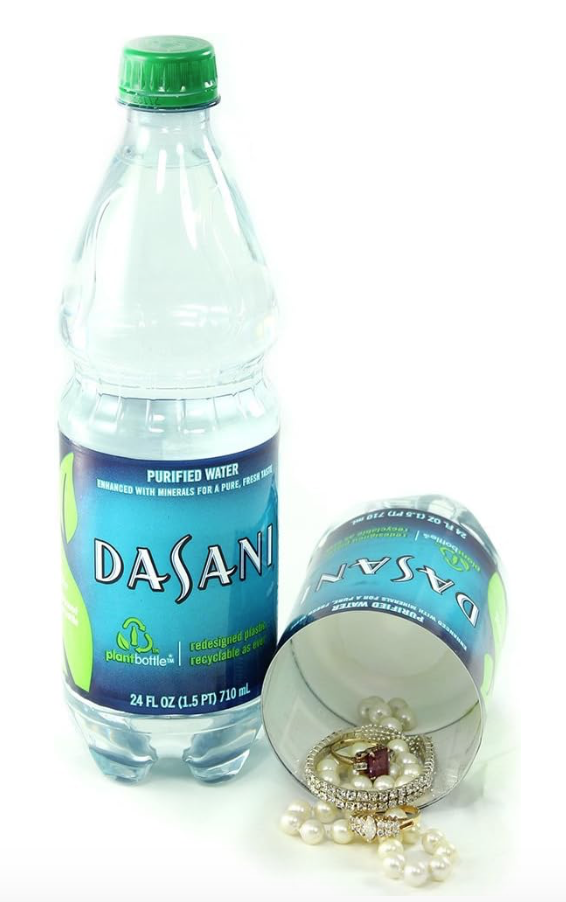
    You might also consider a Dasani Bottled Water Diversion Safe or a Soup Can Diversion Safe. 

    There are plenty of items that you can hide in these safes. Here are just some examples:

    keys
    watches
    medicine
    cash
    gold coins 
    silver coins
    precious gems
    diamonds
    bullets
    USB drives
    necklaces 
    earrings
    rings
    small documents (e.g. Social Security card)
    gold nuggets

    Plan ahead. Keep your valuable safe.

    Happy hiding!


    This page contains Amazon Affiliate links.


    Should You Shine On Silver? Examining the Benefits and Investment Options


    Please note that this is a sister publication of WallStreetNewsNetwork ( https://WStNN.com ) and postings will end on this site shortly. Please go to https://WStNN.com for all future posts. 

    Unveiling the Precious Metal’s Potential in Your Portfolio

    Silver, the lustrous metal, has captivated investors for centuries. But beyond its beauty, silver offers a unique blend of potential benefits for your portfolio. Let’s explore why you might consider adding silver to your investment mix, and then delve into the various ways to hold this precious metal.

    The Allure of Silver

    • Diversification: Silver’s price movements tend to have a low correlation to stocks and bonds. This means it can act as a hedge, potentially offsetting losses in other parts of your portfolio during economic downturns.
    • Inflation Hedge: Silver, like gold, has historically held its value well against inflation. As the cost of living rises, silver’s price may follow suit, protecting your purchasing power.
    • Industrial Demand: Silver’s industrial applications in solar panels, electronics, and medical devices create a constant demand stream, potentially influencing its price positively.
    • Potential for Growth: Silver’s supply is finite, while demand is expected to rise, particularly in developing economies. This imbalance could lead to price appreciation in the long run.
    • Affordable Entry Point: Compared to gold, silver offers a more accessible entry point for investors starting with precious metals.

    Silver Investment Options: Weighing the Pros and Cons

    • PHYSICAL SILVER (Bullion & Coins):
      • Pros: Tangible ownership, no counterparty risk, potential for collector’s value (for certain coins).
      • Cons: Storage costs, insurance considerations, potential difficulty selling quickly.
    • SILVER MINING STOCKS:
      • Pros: Potential for higher returns due to leverage on the silver price, diversification within the precious metals sector.
      • Cons: Higher risk compared to physical silver, volatility associated with the company’s performance.
    • SILVER ETFs (Exchange Traded Funds):
      • Pros: Low storage costs, fractional shares allow for easier investment amounts, high liquidity.
      • Cons: You don’t own physical silver, expense ratios can eat into returns, counterparty risk associated with the ETF issuer.

        The most popular silver ETF is the iShares Silver Trust (SLV), which has an objective of tracking the price of silver.

    A Word about Silver Coins and Authenticity


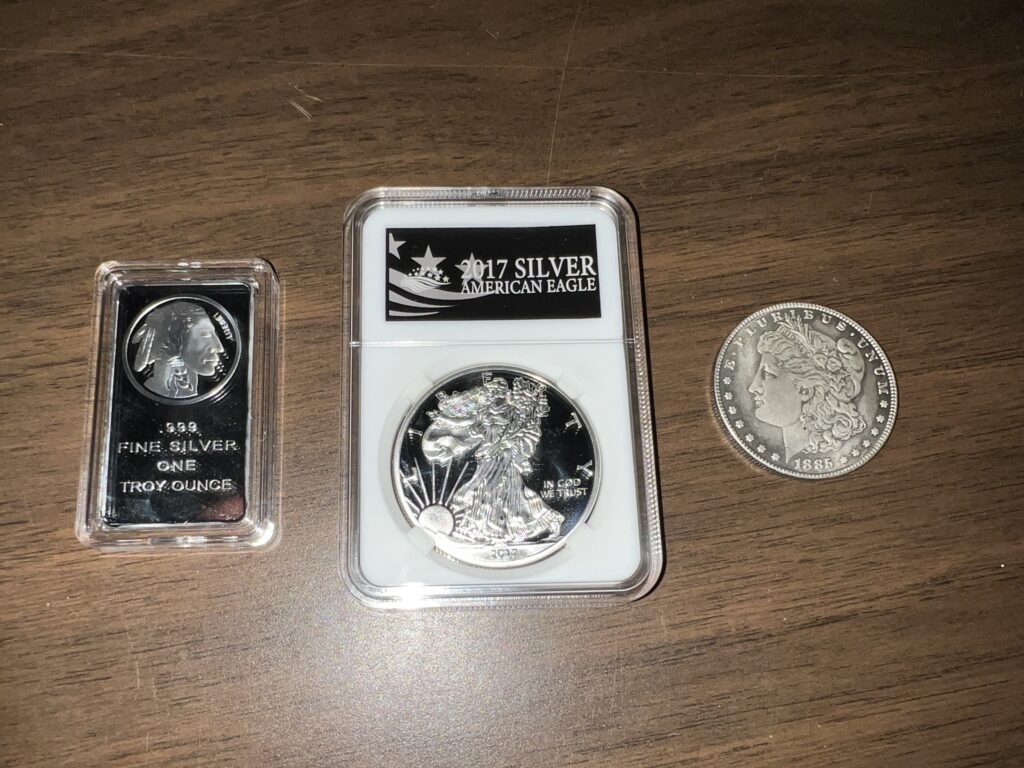
    Be careful about buying silver coins, as there are many fakes being distributed. These are not just the coins with numismatic value but also the so-called junk silver coins and even the bullion coins (silver rounds). 

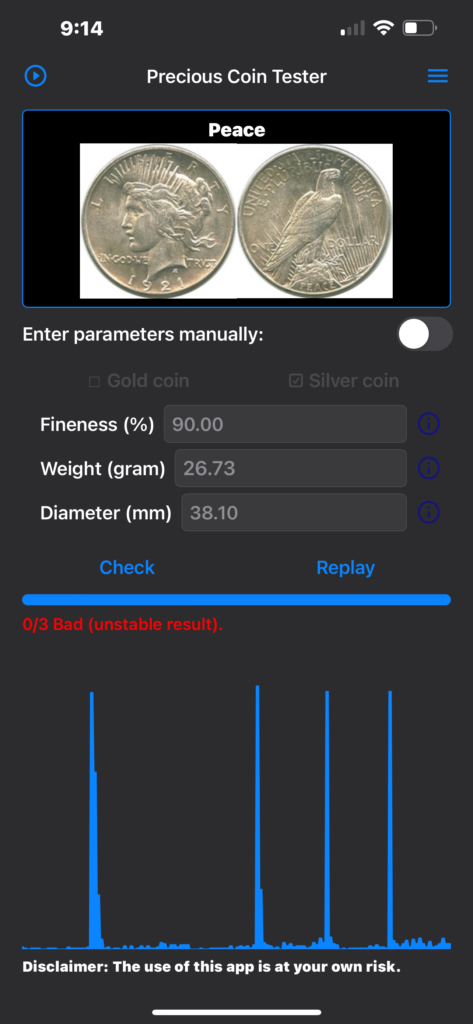
    Fortunately, there are several ways of checking whether a coin is genuine or not. One simple way is to use a phone app called CoinTester. It measures the sound of the ping when the coin is hit with an object, like a pencil.

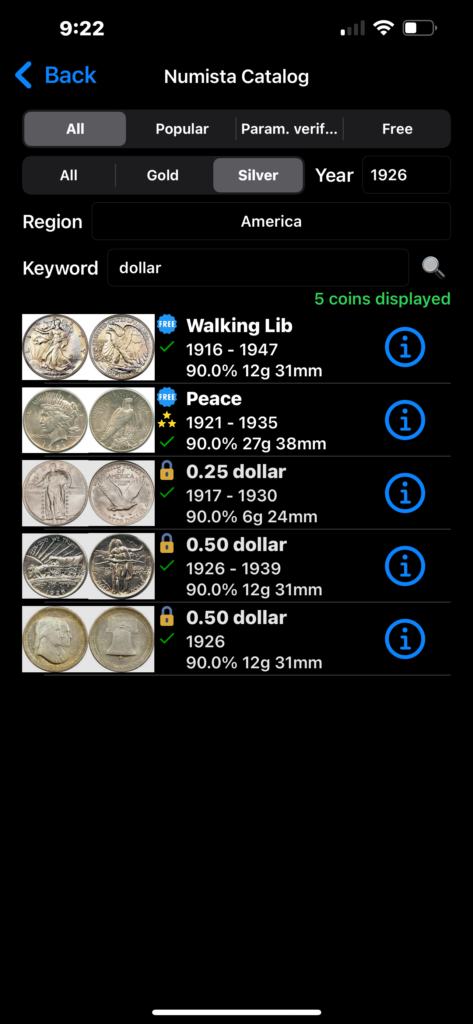
    First, you choose the type of coin. (Note: If you are checking a silver dollar, for Keyword, just type Dollar, not Silver Dollar.) You place the coin on your fingertip, tap Check on the app, then hit the coin a few times with something that won’t damage the coin (I use the wooden part of a pencil.) If is shows a 0 or 1 out of 3, it means the coin is a fake. If it shows a 2 or a 3 out of three, the coin is real.

    Just remember that all tests for coins aren’t foolproof. The best approach is to buy from a very reputable coin dealer.

    Many numismatic coins are slabbed. In numismatics (the study or collection of coins), “slabbed” refers to the process of encapsulating a coin in a hard plastic holder, often called a slab. These slabs are usually sealed and graded by a professional coin grading service. The purpose of slabbing coins is to protect them from damage and to provide an objective assessment of their condition and authenticity.

    When a coin is slabbed, it is typically accompanied by a label indicating its grade, which is determined based on factors such as wear, luster, strike quality, and any imperfections. This grading process helps collectors and investors assess the value of the coin and provides assurance about its authenticity and condition.

    Slabbed coins are often considered more desirable for collectors and investors because they come with a trusted third-party evaluation, reducing the risk of buying counterfeit or over-graded coins.

    The Final Shine

    Silver offers a compelling option for investors seeking diversification, inflation protection, and potential growth. Carefully consider your investment goals and risk tolerance when choosing between physical silver, mining stocks, or ETFs. Remember, a well-rounded portfolio is key, and silver can be a bright addition to the mix.